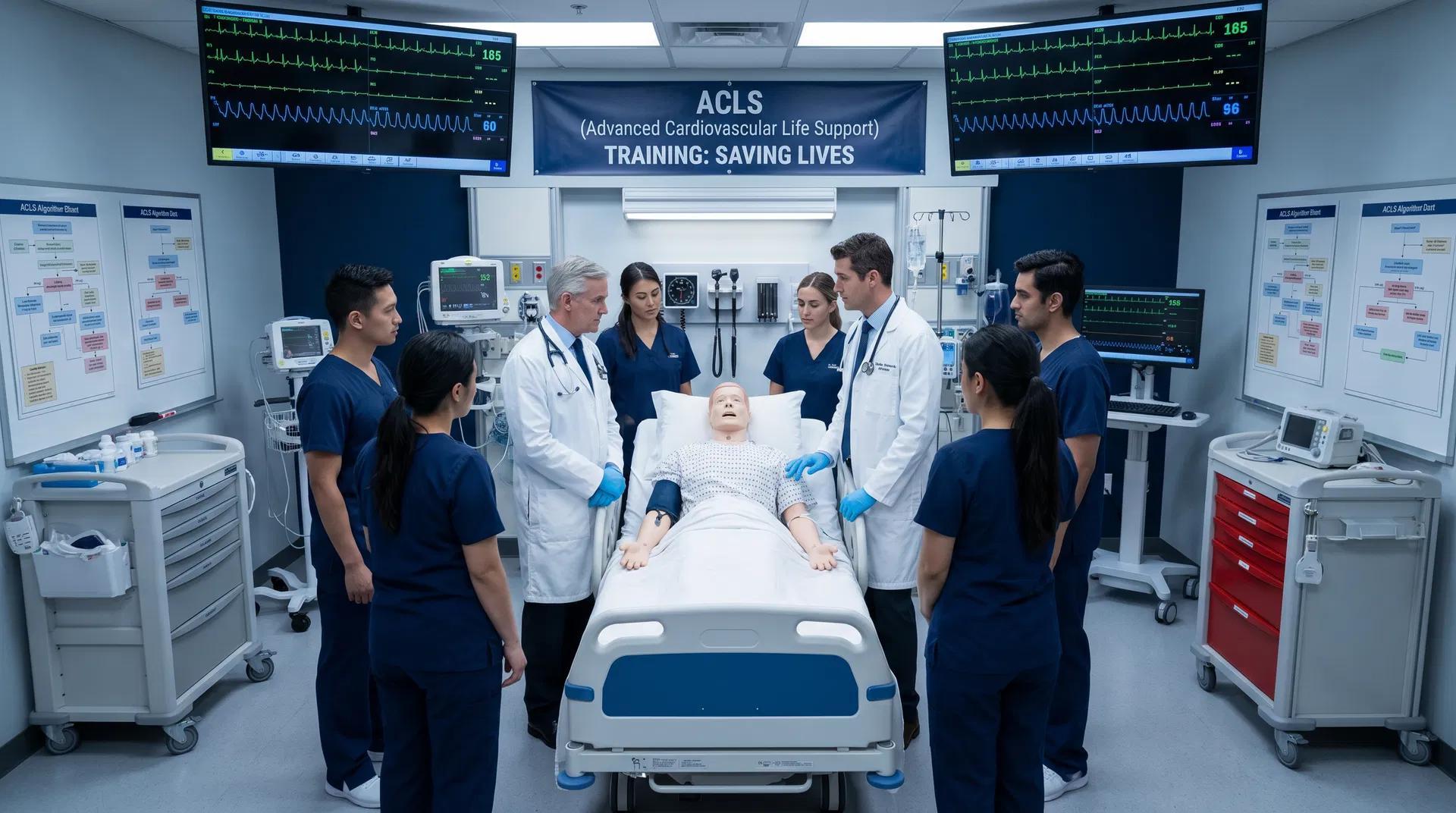
Advanced Cardiovascular Life Support (ACLS) certification is a critical credential for healthcare professionals who respond to cardiac emergencies. Whether you're a nurse, physician, paramedic, or respiratory therapist, understanding what happens during ACLS training helps you prepare effectively and maximize your learning experience. This comprehensive guide walks you through every aspect of the ACLS course, from pre-course preparation to certification day.
Before You Arrive: Pre-Course Preparation
ACLS training builds on your existing Basic Life Support (BLS) knowledge, so you must have a current BLS certification before attending. The American Heart Association requires all ACLS students to complete pre-course self-assessment materials, which typically take 2-3 hours. These materials review essential concepts including ECG rhythm recognition, pharmacology, and the systematic approach to cardiovascular emergencies.
Most training centers, including EMIC, provide access to the ACLS Provider Manual and online pre-course modules when you register. Take these seriously—students who complete the pre-work thoroughly perform significantly better during the hands-on portions of the course. Focus especially on recognizing the core ACLS rhythms: sinus rhythm, atrial fibrillation, ventricular tachycardia, ventricular fibrillation, asystole, and PEA (pulseless electrical activity).
Course Structure and Timeline
ACLS certification courses typically run 8-10 hours, usually completed in a single day or split across two sessions. At EMIC, we structure our courses to balance cognitive learning with hands-on practice, ensuring you develop both the knowledge and muscle memory needed for real emergencies.
Morning Session: Core Concepts and Algorithms
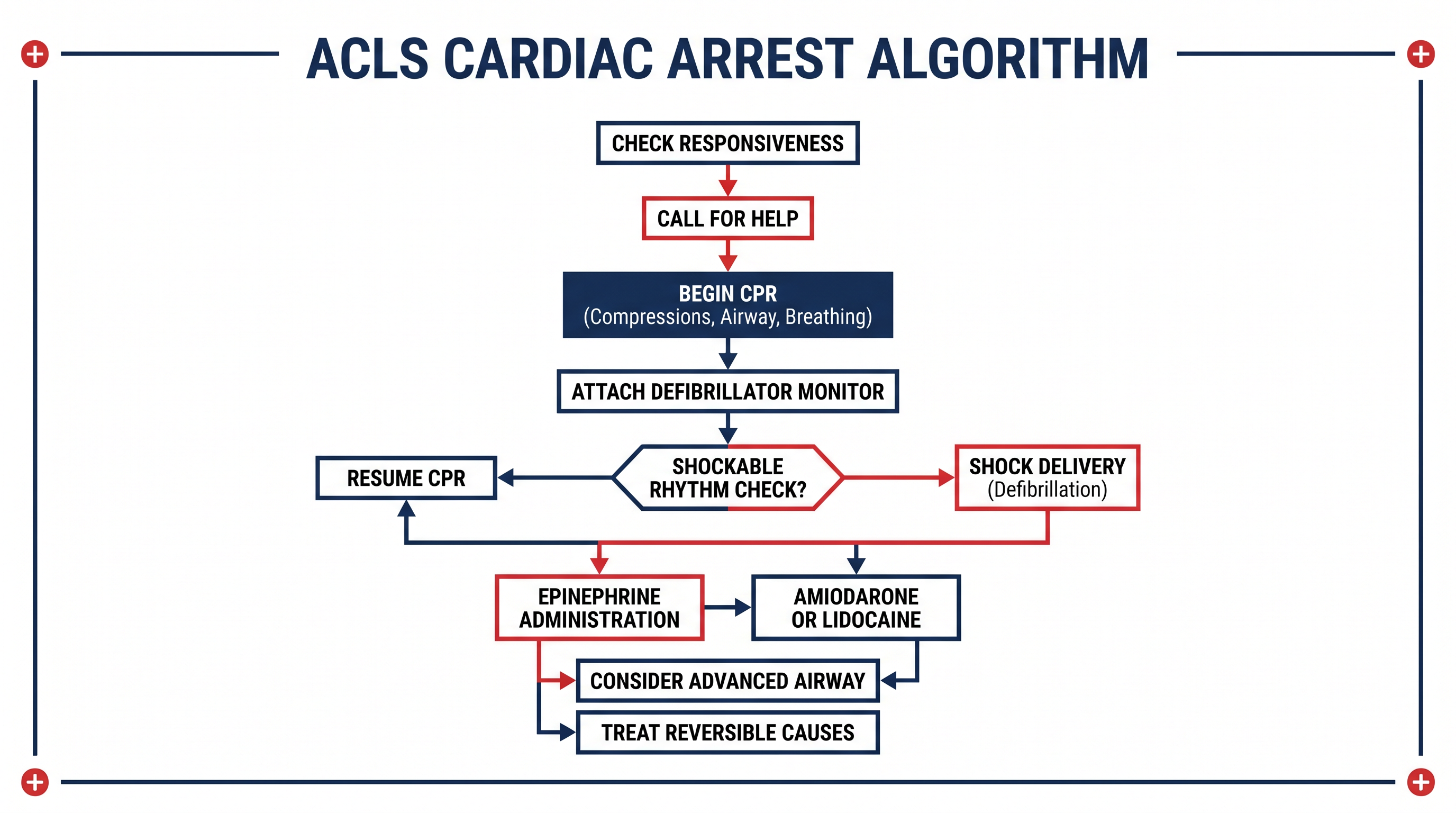
The first half focuses on reviewing and reinforcing the systematic approach to cardiovascular emergencies. You'll work through the ACLS algorithms step-by-step, including the cardiac arrest algorithm, bradycardia algorithm, tachycardia algorithm, and acute coronary syndromes (ACS) pathway. Instructors use case-based scenarios to demonstrate how these algorithms apply in real clinical situations.
Expect interactive discussions about pharmacology—you'll review medications like epinephrine, amiodarone, adenosine, and atropine, including dosing, indications, and contraindications. The emphasis is on understanding why certain medications are used in specific situations, not just memorizing doses.
Afternoon Session: Skills Stations and Mega Code
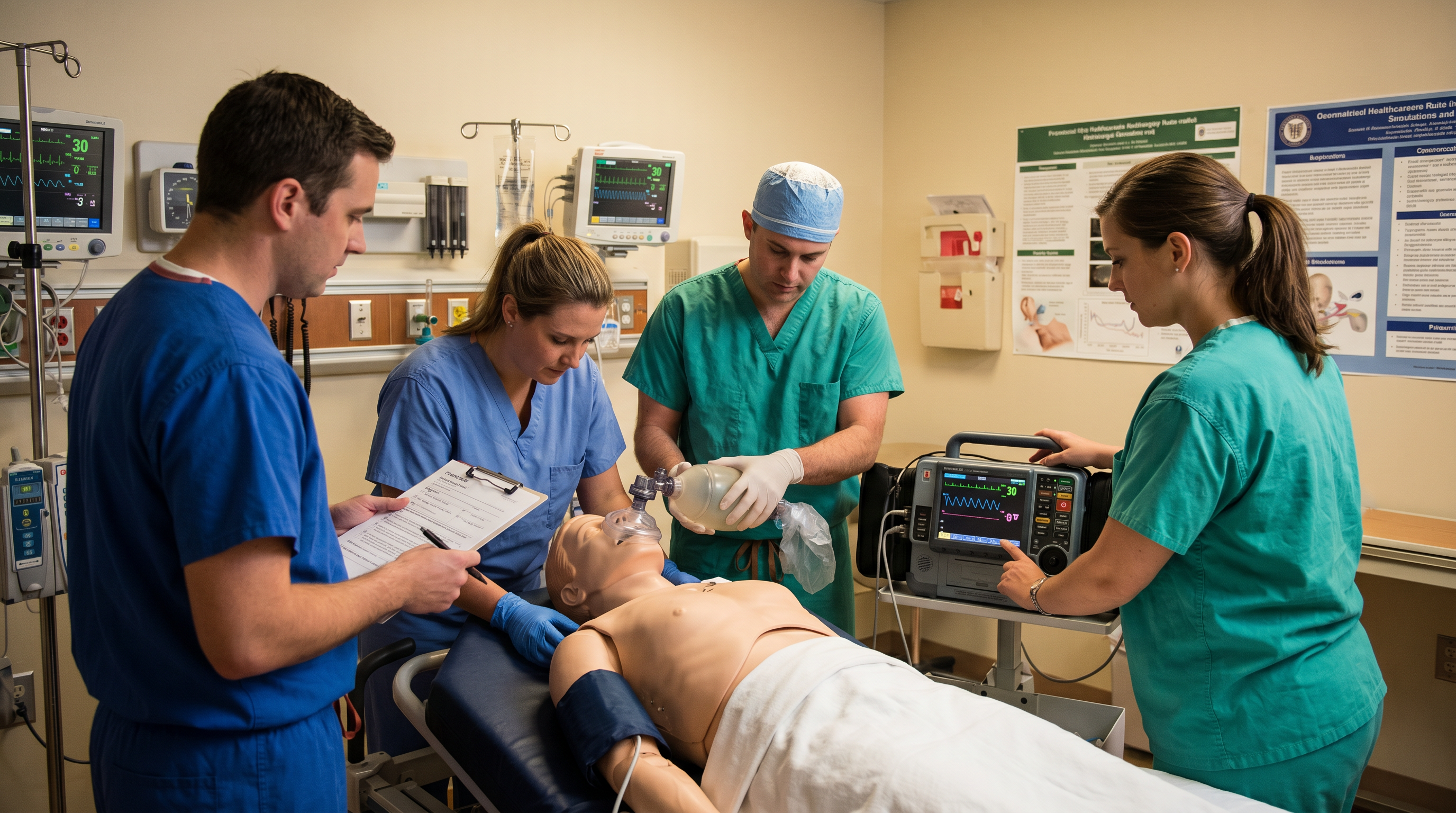
After lunch, the course shifts to hands-on practice. You'll rotate through skills stations covering airway management, defibrillation, cardioversion, and team-based resuscitation. These stations allow you to practice technical skills in a low-pressure environment before the final testing scenarios.
The highlight of ACLS training is the "Mega Code"—a comprehensive simulation where you lead or participate in a full cardiac arrest scenario. You'll work with other students to manage a simulated patient, making real-time decisions about rhythm recognition, medication administration, airway management, and team coordination. This is where everything comes together, and it's the most valuable part of the course for building confidence.
What Skills You'll Practice
High-Quality CPR and Team Dynamics
Even though you're already BLS-certified, ACLS reinforces the critical importance of high-quality chest compressions. You'll practice maintaining proper compression depth (at least 2 inches), rate (100-120 per minute), and minimizing interruptions. The course emphasizes team dynamics—how to communicate clearly, assign roles, and rotate positions to prevent fatigue during prolonged resuscitation efforts.
Rhythm Recognition and Interpretation
You'll spend significant time identifying ECG rhythms and determining appropriate interventions. The course covers shockable rhythms (VF and pulseless VT), non-shockable rhythms (asystole and PEA), and rhythms requiring immediate intervention like unstable bradycardia and unstable tachycardia. Expect to see dozens of rhythm strips and practice making quick, accurate assessments.
Advanced Airway Management
ACLS covers advanced airway techniques including bag-valve-mask ventilation, supraglottic airway devices, and endotracheal intubation (depending on your scope of practice). You'll practice proper ventilation rates, recognizing adequate chest rise, and confirming airway placement. The course emphasizes that high-quality CPR should never be delayed for advanced airway placement.
Defibrillation and Cardioversion
You'll practice using both manual and automated external defibrillators, learning proper pad placement, energy selection, and safety protocols. The course distinguishes between defibrillation (for VF/pulseless VT) and synchronized cardioversion (for unstable tachycardia with a pulse), including when and how to use each technique.
Testing and Certification
ACLS certification requires passing both a written exam and skills assessment. The written exam typically consists of 50 multiple-choice questions covering algorithms, pharmacology, and rhythm recognition. You need a score of at least 84% to pass, and most training centers allow one retake if needed.
The skills assessment evaluates your performance during Mega Code scenarios. Instructors assess your ability to recognize rhythms, follow algorithms, perform high-quality CPR, manage airways, and communicate effectively with your team. The evaluation is competency-based rather than time-based—you pass when you demonstrate proficiency, not when a timer runs out.
Upon successful completion, you'll receive your American Heart Association ACLS Provider certification card, valid for two years. At EMIC, we issue cards the same day, so you leave with your credential in hand.
Common Challenges and How to Overcome Them
Rhythm Recognition Anxiety
Many students feel overwhelmed by ECG interpretation. The key is focusing on the core rhythms and their defining characteristics rather than trying to memorize every possible variation. Use the pre-course materials to practice rhythm recognition daily in the week before your course. Mobile apps and flashcards can help build confidence.
Pharmacology Overload
ACLS pharmacology can seem daunting, but remember that you don't need to memorize every detail. Focus on understanding when and why medications are used, and know where to find dosing information quickly (hint: it's on the algorithm cards). In real practice, you'll have references available—the course teaches you clinical decision-making, not rote memorization.
Performance Pressure During Mega Code
The Mega Code can feel intimidating, but remember that it's a learning environment. Instructors want you to succeed and will provide guidance if you get stuck. Treat it as an opportunity to practice in a safe setting before you face a real emergency. The more you engage during practice scenarios, the more comfortable you'll feel during the final assessment.
After the Course: Maintaining Your Skills
ACLS certification is valid for two years, but skills decay quickly without practice. Consider these strategies to maintain proficiency:
- Review algorithm cards monthly
- Practice rhythm recognition using online resources or apps
- Participate in workplace mock codes or simulation training
- Discuss challenging cases with colleagues to reinforce decision-making skills
- Consider taking a refresher course after one year rather than waiting until expiration
Why Choose EMIC for Your ACLS Training
At EMIC, our ACLS courses are taught by experienced healthcare professionals who bring real-world emergency medicine experience to the classroom. We maintain small class sizes to ensure individual attention during skills practice, and our instructors create a supportive learning environment where questions are encouraged.
We offer flexible scheduling with courses available throughout the week, including evening and weekend options for busy healthcare professionals. Our training facility in Upstate New York is equipped with high-fidelity simulation equipment, giving you hands-on experience with the same tools you'll use in clinical practice.
Most importantly, we focus on practical application rather than just checking boxes. Our goal is to ensure you leave confident in your ability to lead or participate in a resuscitation team, not just pass a test. That's why our students consistently report feeling well-prepared for real-world cardiac emergencies.
The EMIC Advantage: Personalized Training That Fits Your Schedule
What truly sets EMIC apart is our commitment to individualized instruction. Unlike traditional classroom settings where one instructor manages multiple students, we offer a 1:1 instructor-to-student ratio for those who need it. This personalized approach dramatically reduces course time—many students complete their ACLS certification in 4-6 hours instead of the typical 8-10 hours, without sacrificing quality or comprehension.
We understand that healthcare professionals have demanding schedules and different learning styles. That's why we provide flexibility at every step:
Flexible Exam Options
Choose between written or electronic exams based on your preference. Some students prefer the traditional paper format, while others appreciate the immediate feedback of electronic testing. Both options meet AHA requirements and provide the same valid certification.
In-Depth Exam Analysis and Remediation
If you don't pass on your first attempt, we don't just hand you a retake—we provide comprehensive exam analysis to identify exactly where you need additional support. Our instructors review each missed question with you, explain the underlying concepts, and offer targeted remediation to address knowledge gaps. This individualized approach ensures you truly understand the material, not just memorize answers.
Custom Student Guides and Study Plans
Every student learns differently. For those who need extra support, we create custom student guides tailored to your specific learning needs. Whether you're a visual learner who benefits from diagrams and flowcharts, or you need additional practice with rhythm recognition, we adapt our materials to match your learning style.
We also develop individualized study plans for students who want structured guidance between registration and class day. These plans break down the pre-course material into manageable daily or weekly goals, ensuring you arrive fully prepared and confident. For students with test anxiety or those returning to healthcare after a break, this personalized roadmap makes a significant difference in outcomes.
This level of personalization is rare in emergency medical training, but it's standard practice at EMIC. We believe that certification should be accessible to everyone, regardless of learning style, schedule constraints, or previous experience. Our goal isn't just to get you certified—it's to ensure you're genuinely prepared to save lives.
Ready to Get ACLS Certified?
ACLS training is challenging but rewarding. With proper preparation and the right training environment, you'll gain the knowledge and skills to respond confidently to cardiovascular emergencies. Whether you're taking ACLS for the first time or renewing your certification, understanding what to expect helps you make the most of your training day.
EMIC offers ACLS certification courses throughout Upstate New York with flexible scheduling and expert instruction. We also provide on-site training for hospitals, emergency departments, and healthcare facilities. Contact us today to schedule your ACLS course or learn more about group training options.
References
- American Heart Association. (2020). 2020 American Heart Association Guidelines for CPR and Emergency Cardiovascular Care. Circulation, 142(16_suppl_2). ahajournals.org
- American Heart Association. (2024). ACLS Provider Manual. American Heart Association. heart.org
- Panchal, A. R., et al. (2019). 2019 American Heart Association Focused Update on Advanced Cardiovascular Life Support: Use of Advanced Airways, Vasopressors, and Extracorporeal Cardiopulmonary Resuscitation During Cardiac Arrest. Circulation, 140(24), e881–e894. ahajournals.org
- Merchant, R. M., et al. (2020). Part 1: Executive Summary: 2020 American Heart Association Guidelines for CPR and Emergency Cardiovascular Care. Circulation, 142(16_suppl_2), S337–S357. ahajournals.org
- Edelson, D. P., et al. (2020). Interim Guidance for Basic and Advanced Life Support in Adults, Children, and Neonates With Suspected or Confirmed COVID-19. Circulation, 141(25), e933–e943. ahajournals.org