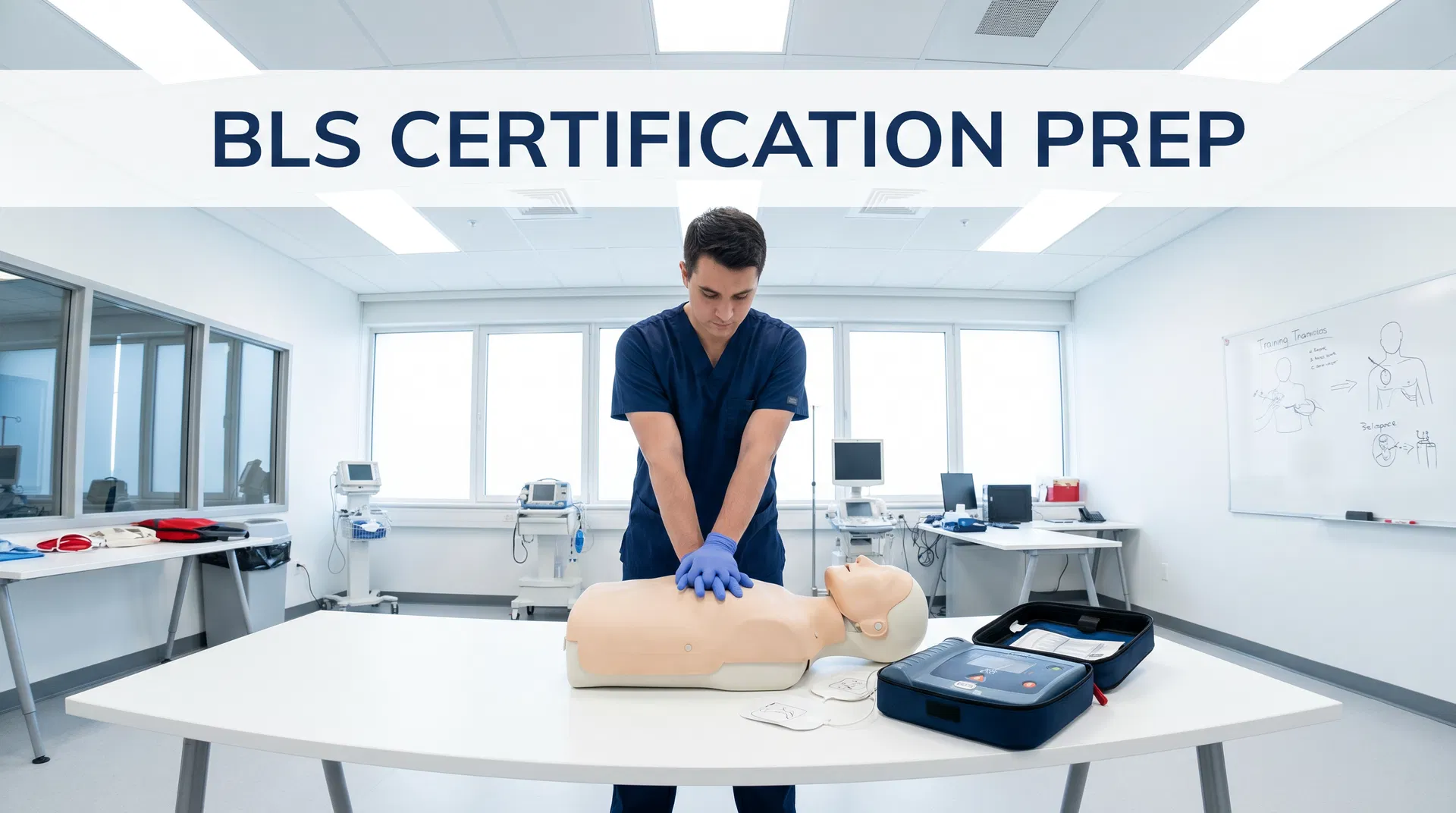
Getting your Basic Life Support (BLS) certification is an important milestone for healthcare professionals, first responders, and anyone who wants to be prepared to save lives. Whether you're a nursing student taking BLS for the first time, a physician renewing your certification, or a fitness instructor required to maintain CPR credentials, proper preparation ensures you'll pass with confidence and gain skills that truly matter in emergencies. This comprehensive guide covers everything you need to know, study, and bring to succeed in your BLS certification course.
Understanding BLS Certification Requirements
BLS certification from the American Heart Association is the gold standard for healthcare providers. The course teaches high-quality CPR for adults, children, and infants, proper use of an automated external defibrillator (AED), relief of choking, and effective team dynamics during resuscitation. Unlike basic CPR courses designed for the general public, BLS is specifically tailored for healthcare professionals and includes techniques like two-person CPR and bag-valve-mask ventilation.
Most BLS courses run 4-5 hours and combine cognitive learning with hands-on skills practice. You'll need to pass both a written exam (typically 25 questions with an 84% passing score) and a skills assessment demonstrating proper CPR technique, AED use, and choking relief. At EMIC, we issue your certification card the same day upon successful completion, so you leave ready to work.
Before the Course: Study and Review
Review the BLS Provider Manual
When you register for BLS training, you'll receive access to the AHA BLS Provider Manual. Don't skip this—reading through the manual before class gives you a significant advantage. Focus on understanding the Chain of Survival, the systematic approach to BLS, and the differences between adult, child, and infant CPR techniques. You don't need to memorize every detail, but familiarizing yourself with the concepts means you'll spend less time processing new information during class and more time practicing skills.
Watch Pre-Course Videos
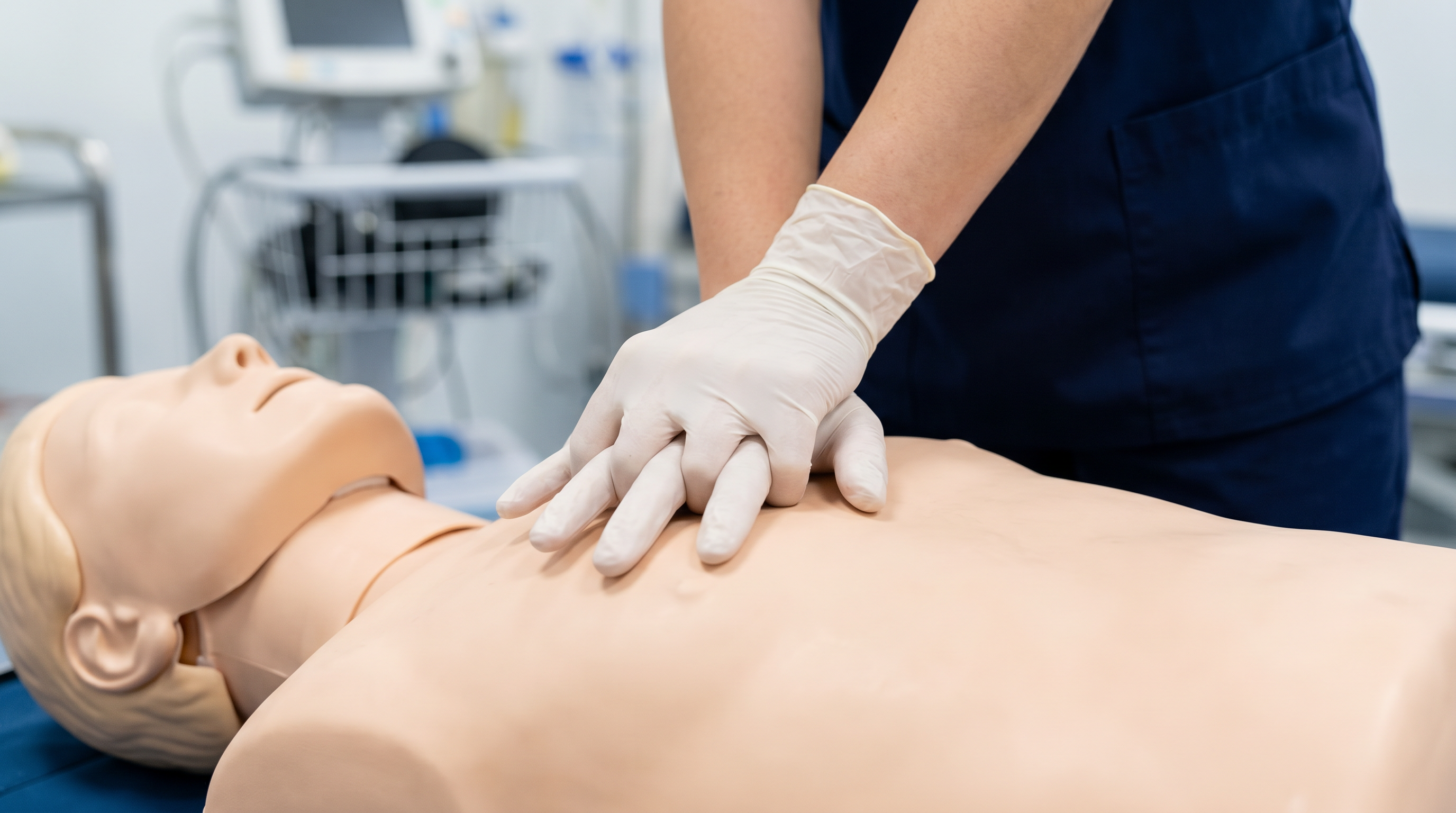
The American Heart Association provides online pre-course videos demonstrating proper CPR technique, AED use, and choking relief. Watching these videos helps you visualize what you'll be practicing. Pay attention to hand placement, compression depth and rate, and the sequence of steps for each skill. Seeing the techniques performed correctly before you try them yourself makes the hands-on portion much easier.
Understand Key Concepts
Several core concepts appear throughout BLS training. Understanding these before class helps everything else fall into place:
- High-quality CPR: Compressions at least 2 inches deep (but not exceeding 2.4 inches), at a rate of 100-120 per minute, with full chest recoil between compressions
- Compression-to-ventilation ratio: 30 compressions to 2 breaths for single rescuer (adult, child, infant); 15:2 for two-rescuer infant/child CPR
- Minimize interruptions: Chest compressions should be interrupted for no more than 10 seconds at a time
- Early defibrillation: Use an AED as soon as it's available for sudden cardiac arrest
- Team dynamics: Clear communication, defined roles, and mutual respect during resuscitation
What to Bring on Class Day
Required Items
- Valid photo ID: Required for certification card issuance
- Comfortable clothing: You'll be kneeling on the floor and performing chest compressions, so wear clothes that allow free movement
- Closed-toe shoes: For safety during hands-on practice
Recommended Items
- Water bottle: CPR practice is physically demanding; stay hydrated
- Snack: A light snack can help maintain energy during the course
- Notebook and pen: For taking notes, though all essential information is in the manual
- Hair tie: If you have long hair, you'll want it secured during practice
Note: All training equipment, including CPR manikins, AED trainers, and barrier devices, is provided by the training center. You don't need to bring any medical equipment.
Physical Preparation
BLS training is more physically demanding than many people expect. High-quality chest compressions require significant effort, and you'll be practicing on your knees for extended periods. If you have any physical limitations (back problems, knee issues, etc.), inform your instructor at the start of class—accommodations can be made, such as practicing compressions from a standing position using a bed or table.
Get a good night's sleep before your course. Being well-rested helps with both physical stamina and cognitive learning. Eat a light meal before class—enough to sustain your energy but not so much that you feel sluggish during practice.
Mental Preparation and Mindset
Embrace the Learning Process
BLS training is a safe environment to learn and make mistakes. Don't worry about performing perfectly on your first attempt—that's why you're taking the course. Instructors expect students to need practice and correction. The more engaged you are during practice scenarios, the more confident you'll feel during the final assessment.
Ask Questions
If something isn't clear, ask. Chances are, other students have the same question. Good instructors welcome questions because they indicate engagement and help ensure everyone understands the material. There's no such thing as a "stupid question" in BLS training—these skills save lives, and understanding them correctly matters.
Focus on Practical Application
While you need to pass the written exam, the real value of BLS training is in the hands-on skills. During practice, focus on developing muscle memory for proper technique rather than just going through the motions. Think about how you would apply these skills in your actual work environment. This mindset shift—from "passing a test" to "preparing to save lives"—makes the training more meaningful and helps retention.
Common Concerns and How to Address Them
"I'm not strong enough to do CPR correctly"
Proper CPR technique relies more on body mechanics than raw strength. Instructors will teach you to position your body so that you're using your body weight rather than arm strength to compress the chest. Most people, regardless of size or strength, can perform effective CPR once they learn the correct positioning. If you have concerns about physical limitations, discuss them with your instructor—alternative techniques or positions may be available.
"I'm nervous about the written exam"
The BLS written exam tests your understanding of key concepts, not your ability to memorize obscure details. If you've reviewed the pre-course materials and paid attention during class, you'll be well-prepared. The exam is open-book in many training centers, meaning you can reference your manual during the test. Focus on understanding the "why" behind each technique rather than memorizing facts, and you'll do fine.
"What if I forget the steps during the skills test?"
Skills assessments in BLS courses are competency-based, not trick tests. Instructors want you to succeed and will provide prompts if you get stuck. The key is demonstrating that you understand the systematic approach and can perform the skills safely and effectively. If you forget a step, take a breath, think through the sequence, and continue. Minor hesitations don't mean failure—what matters is showing you can ultimately perform the skill correctly.
Day-of-Class Tips for Success
Arrive Early
Plan to arrive 10-15 minutes before the scheduled start time. This gives you time to find the training location, use the restroom, and settle in without feeling rushed. Early arrival also allows you to introduce yourself to the instructor and ask any preliminary questions.
Participate Actively
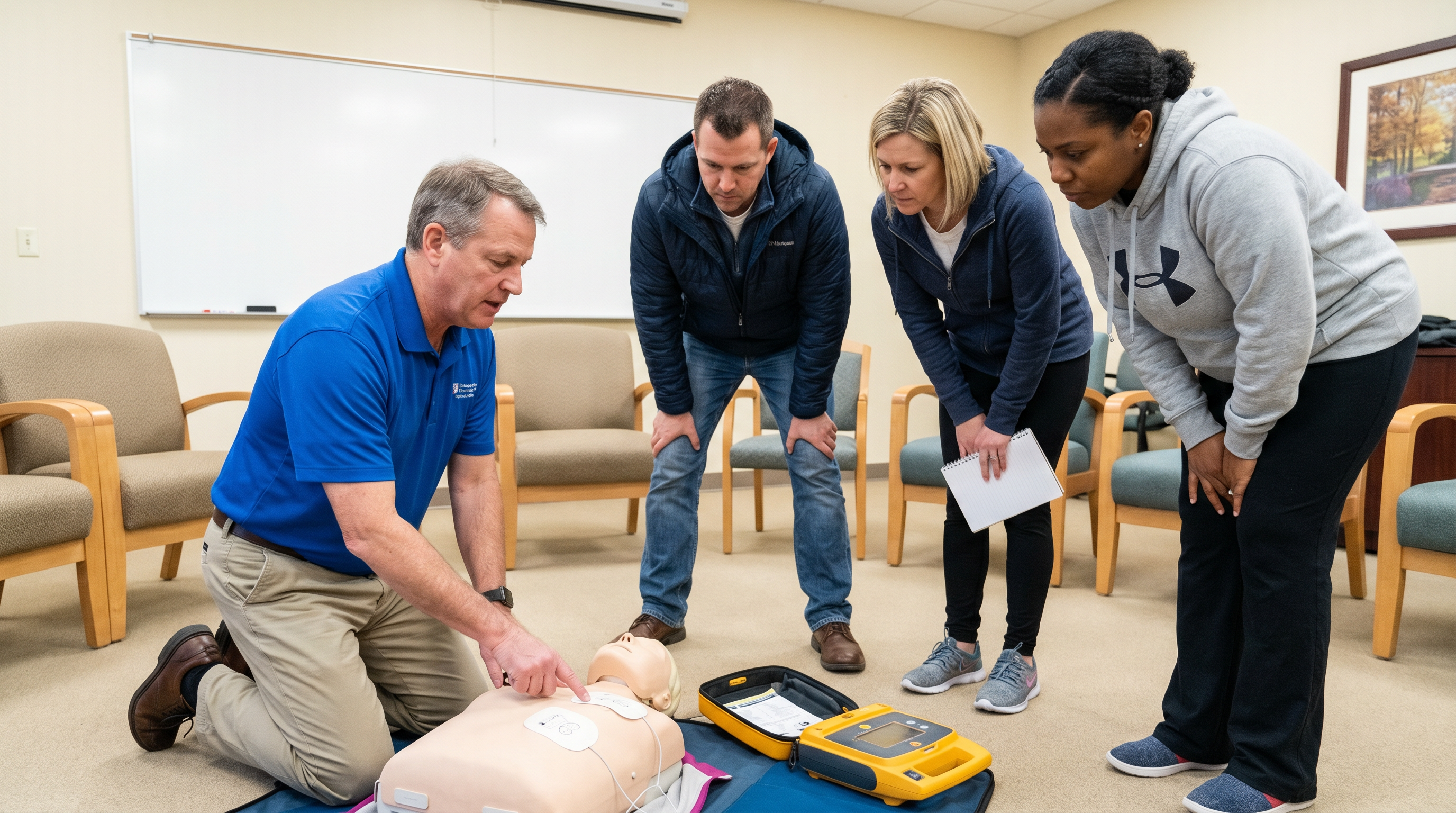
The more you practice during class, the better you'll perform during the assessment. Volunteer for demonstrations, practice with different partners, and take advantage of every opportunity to work with the manikins and AED trainers. Active participation also makes the time go faster and makes learning more enjoyable.
Take Breaks When Needed
BLS training is physically demanding. If you need a break to rest your knees or catch your breath, take it. Instructors understand that CPR practice is tiring and would rather you take a brief break than push through and risk injury or exhaustion.
Practice the Systematic Approach
BLS emphasizes a systematic approach to assessment and intervention. During practice, verbalize the steps as you perform them: "Check for responsiveness, call for help, check for breathing and pulse, begin CPR..." This helps reinforce the sequence and ensures you don't skip steps during the assessment.
After Certification: Maintaining Your Skills
BLS certification is valid for two years, but skills can deteriorate quickly without practice. Consider these strategies to maintain proficiency:
- Review your BLS manual periodically, especially before starting a new job or clinical rotation
- Participate in workplace mock codes or simulation training when available
- Practice CPR technique on a manikin if your workplace has training equipment
- Stay current with AHA guideline updates (the AHA now uses a continuous evidence evaluation process, publishing focused updates as new evidence emerges rather than waiting for a fixed 5-year cycle) [1]
- Consider taking a refresher course after one year rather than waiting until expiration
Why Choose EMIC for Your BLS Certification
At EMIC, we understand that BLS training is more than checking a box for employment requirements—it's about gaining confidence to respond effectively in real emergencies. Our instructors are experienced healthcare professionals who bring practical, real-world perspective to the classroom. We maintain small class sizes to ensure individual attention during skills practice, and our supportive learning environment encourages questions and active participation.
We offer daily BLS classes throughout Upstate New York with flexible scheduling, including evening and weekend options. Our training facility is equipped with high-quality manikins and AED trainers, and we issue certification cards the same day upon successful completion. We also provide on-site training for healthcare facilities, schools, and businesses with groups of 10 or more.
Most importantly, we offer competitive pricing while maintaining practical instruction. We believe life-saving training should be accessible to the people and organizations that need it.
Ready to Get BLS Certified?
Proper preparation makes BLS certification straightforward and rewarding. By reviewing pre-course materials, bringing the right items, and approaching the training with an engaged mindset, you'll gain skills that could save a life—possibly of a patient, coworker, or loved one. The investment of a few hours in preparation pays dividends in confidence and competence.
EMIC offers BLS certification options for healthcare professionals and organizations. Book a class today or contact us to discuss scheduling and group training.
References
- American Heart Association. (2020). 2020 American Heart Association Guidelines for CPR and Emergency Cardiovascular Care. Circulation, 142(16_suppl_2). ahajournals.org
- American Heart Association. (2024). BLS Provider Manual. American Heart Association. heart.org
- Olasveengen, T. M., et al. (2020). Adult Basic Life Support: 2020 International Consensus on Cardiopulmonary Resuscitation and Emergency Cardiovascular Care Science With Treatment Recommendations. Circulation, 142(16_suppl_1), S41–S91. ahajournals.org
- Meaney, P. A., et al. (2013). Cardiopulmonary Resuscitation Quality: Improving Cardiac Resuscitation Outcomes Both Inside and Outside the Hospital. Circulation, 128(4), 417–435. ahajournals.org
- Bhanji, F., et al. (2015). Part 14: Education: 2015 American Heart Association Guidelines Update for Cardiopulmonary Resuscitation and Emergency Cardiovascular Care. Circulation, 132(18 Suppl 2), S561–S573. ahajournals.org