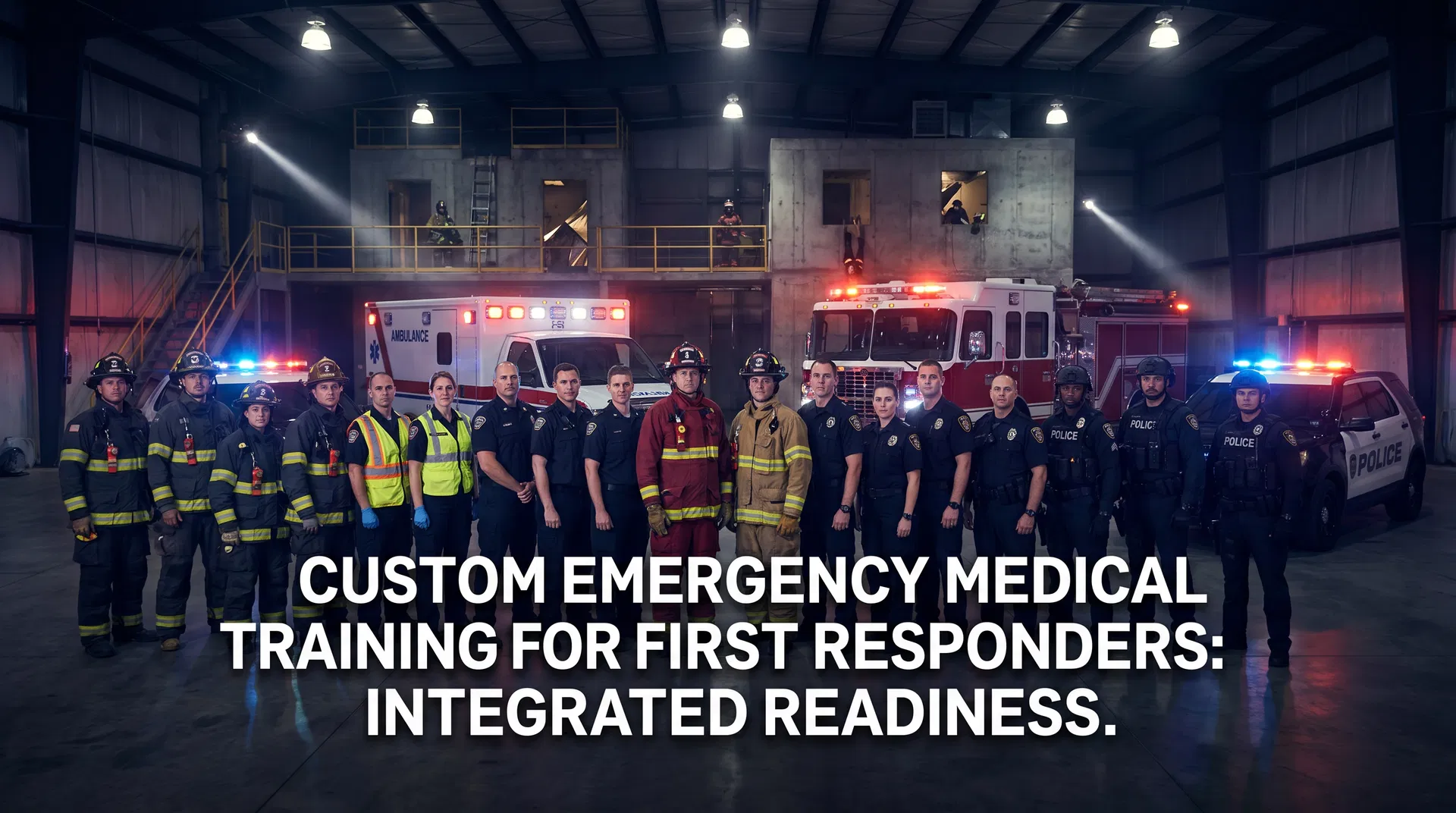
First responders—firefighters, police officers, paramedics, and search and rescue technicians—face unique challenges that standard emergency medical training doesn't always address. While traditional BLS, ACLS, and PALS courses provide essential life-saving skills, they're designed for controlled healthcare environments, not the chaotic, resource-limited, and often dangerous situations first responders encounter daily. EMIC recognized this gap and pioneered custom training programs that blend AHA-certified emergency medical education with scenario-based instruction tailored to the specific operational realities of first responder agencies.
The Challenge: One-Size-Fits-All Training Doesn't Work
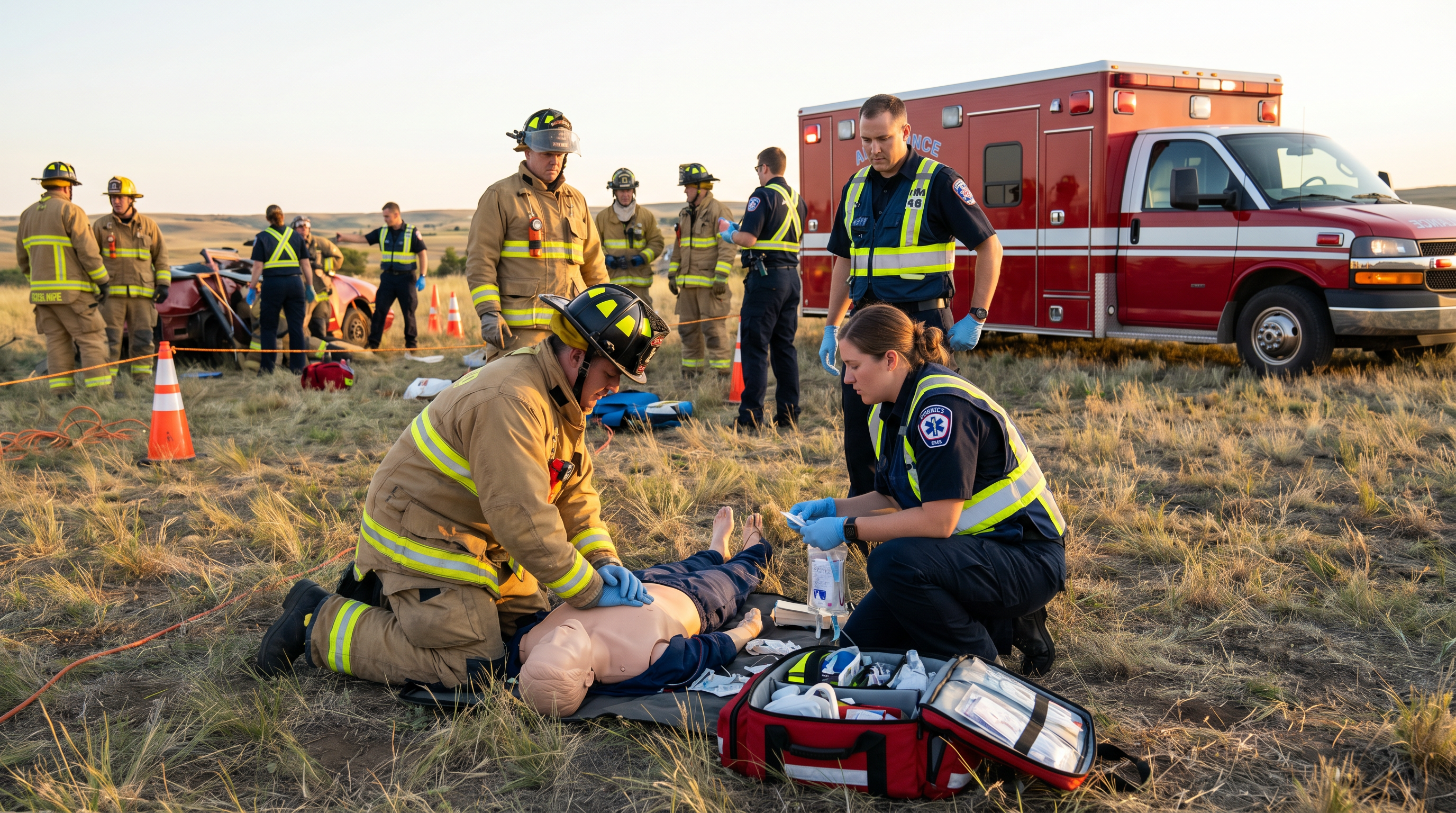
Traditional emergency medical training is excellent for what it's designed to do—prepare healthcare providers to respond to cardiac arrests and medical emergencies in hospitals, clinics, and ambulances. But first responders operate in fundamentally different environments. A firefighter performing CPR in full turnout gear in a smoke-filled structure faces challenges a hospital nurse never encounters. A police officer providing first aid at an active crime scene must balance medical care with officer safety and evidence preservation. A search and rescue technician treating an injured hiker miles from the nearest road needs skills that go far beyond standard certification courses.
EMIC's founder, an experienced paramedic and emergency medical educator, saw firsthand how standard training programs left gaps in first responder preparedness. Agencies were sending personnel to generic certification courses that didn't address their specific operational needs, then trying to fill the gaps with informal on-the-job training. This approach was inefficient, inconsistent, and sometimes dangerous.
The Solution: Custom Training Programs for First Responder Agencies
EMIC developed an integrated approach: start with AHA-certified BLS, ACLS, or PALS training to ensure first responders have the foundational skills and credentials required by their employers, then layer on custom scenario-based training that addresses the unique challenges of their specific roles. This approach ensures certification compliance while delivering practical, applicable skills that first responders can use immediately in the field.
Fire Service: Tactical Emergency Medical Support
For fire departments, EMIC developed training programs that address the specific medical challenges firefighters face. Standard BLS training assumes you can immediately access a patient, but firefighters often must perform rescue operations before medical care can begin. EMIC's custom fire service training includes:
- Medical care in IDLH environments: Performing assessments and interventions while wearing SCBA and full PPE
- Rapid extraction and treatment: Balancing the need to move patients quickly with the need to provide medical care
- Mass casualty incident management: Triage and treatment protocols for structure fires, vehicle accidents, and other multi-patient scenarios
- Firefighter down scenarios: Specific protocols for treating injured firefighters, including SCBA emergencies and thermal injuries
- Integration with fire ground operations: How medical care fits into incident command structure and fireground tactics
One fire department EMIC works with regularly requested training on managing cardiac arrests during structure fires—a scenario that combines the challenges of patient access, environmental hazards, limited resources, and the need for rapid decision-making. EMIC developed a custom drill that simulates a firefighter cardiac arrest in a smoke-filled environment, requiring the team to perform rescue, extrication, and resuscitation while maintaining safety protocols. This type of scenario-based training builds muscle memory and decision-making skills that generic certification courses can't provide.
Law Enforcement: Medical Care in Tactical Environments
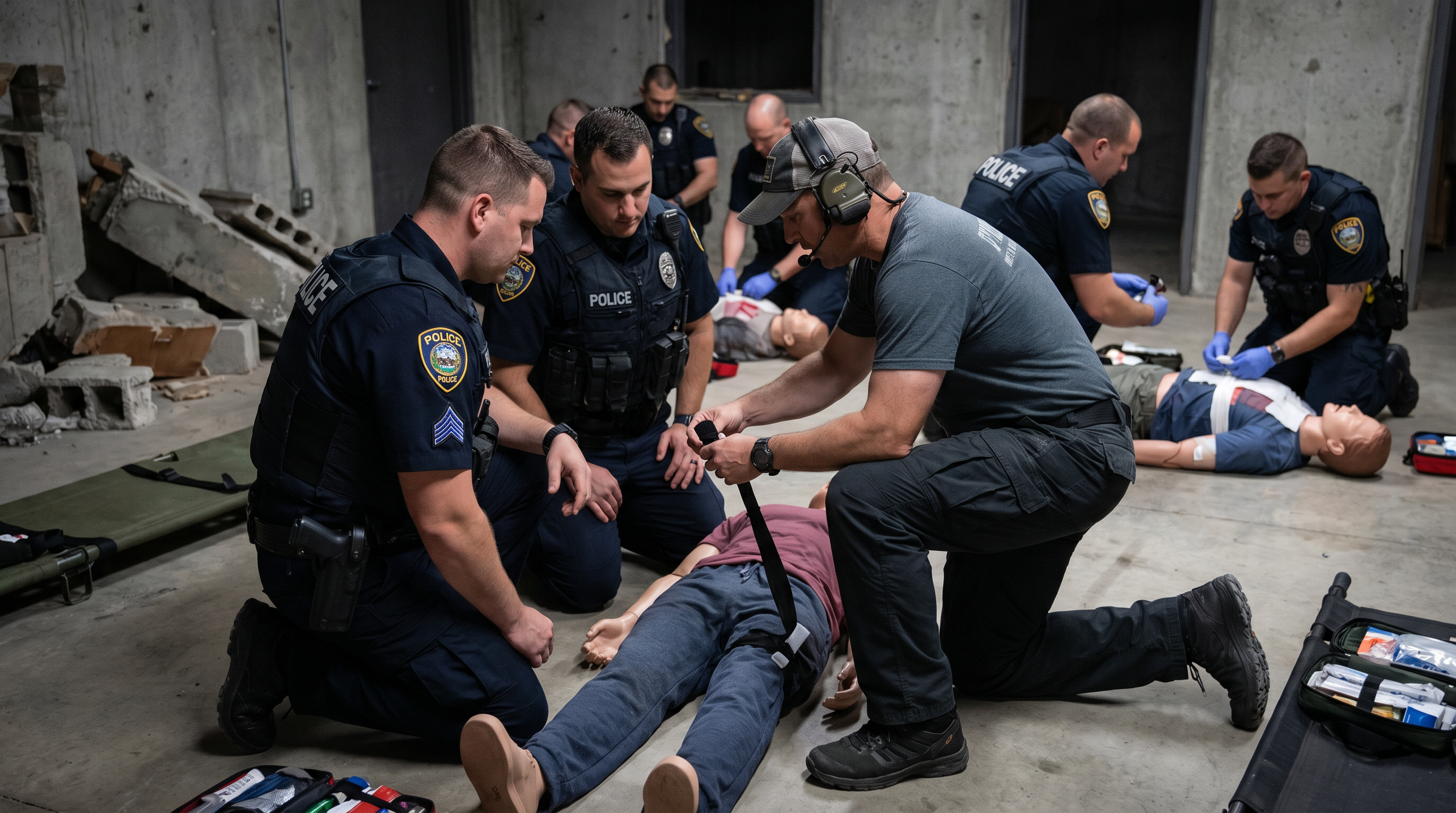
Police officers increasingly find themselves as first medical responders at crime scenes, traffic accidents, and other emergencies where EMS hasn't yet arrived. EMIC's custom law enforcement training addresses the unique challenges of providing medical care while maintaining officer safety and scene security:
- Tactical medicine basics: Providing care in potentially hostile environments, including active shooter scenarios
- Trauma management: Controlling life-threatening bleeding, managing penetrating trauma, and stabilizing patients before EMS arrival
- Medical care with limited equipment: Improvising with available resources when medical supplies are limited
- Evidence preservation: Providing medical care while maintaining chain of custody and preserving crime scene integrity
- Officer down scenarios: Specific protocols for treating injured officers, including ballistic trauma and duty gear considerations
A regional police department approached EMIC after recognizing that their officers were often first on scene for cardiac arrests and traumatic injuries but felt unprepared to provide effective care before EMS arrived. EMIC developed a custom program combining BLS certification with tactical medicine principles, including hands-on scenarios involving simulated gunshot wounds, vehicle extraction, and mass casualty incidents. Officers reported significantly increased confidence in their ability to provide life-saving care in the critical minutes before paramedics arrive.
EMS: Advanced Skills and Specialized Scenarios
While paramedics and EMTs receive extensive medical training, EMIC's custom programs help EMS agencies address specific operational challenges and maintain high-level skills:
- Pediatric emergency scenarios: High-stress, low-frequency calls that require specialized skills and frequent practice
- Multi-patient management: Triage, resource allocation, and treatment prioritization during MCIs
- Difficult airway management: Advanced techniques for challenging intubations and airway emergencies
- Critical care transport: Managing ventilators, infusion pumps, and complex patients during interfacility transfers
- Wilderness and remote medicine: Providing care in environments where definitive care is hours away
EMIC works with several EMS agencies to provide quarterly scenario-based training that keeps skills sharp and addresses emerging challenges. These sessions go beyond standard recertification by incorporating real cases the agency has encountered, allowing crews to debrief difficult calls and practice improved approaches in a controlled environment.
Search and Rescue: Extended Care in Austere Environments
Search and rescue technicians face perhaps the most challenging medical scenarios—providing care to injured or ill patients in remote locations with limited equipment and no immediate access to advanced medical resources. EMIC's custom SAR training addresses:
- Prolonged field care: Managing patients for hours or days before evacuation is possible
- Environmental medicine: Treating hypothermia, heat illness, altitude sickness, and environmental injuries
- Improvised equipment: Creating splints, litters, and medical devices from available materials
- Technical rescue medicine: Providing care during rope rescue, confined space rescue, and other technical operations
- Resource-limited decision making: Prioritizing interventions when supplies are limited and resupply is impossible
A mountain rescue team approached EMIC after a challenging call where they had to manage a severely injured climber for six hours before helicopter evacuation was possible. EMIC developed a custom training program that combined wilderness medicine principles with scenario-based drills simulating extended patient care in remote environments. The training included realistic scenarios where teams had to make difficult decisions about resource allocation, patient movement, and when to call for additional support.
The EMIC Approach: Scenario-Based Learning
What makes EMIC's custom training programs effective is the emphasis on realistic, scenario-based learning. Rather than simply lecturing about techniques, EMIC instructors create high-fidelity simulations that replicate the stress, chaos, and resource limitations first responders face in real emergencies. Students practice skills under realistic conditions, make decisions in real-time, and receive immediate feedback from experienced instructors who have been there themselves.
EMIC instructors are active or retired first responders and emergency medical professionals who bring real-world experience to every training session. They understand the operational realities of first responder work because they've lived it. This credibility matters—students trust instructors who have faced the same challenges and can speak from experience rather than theory.
Measuring Success: Real-World Impact
The true measure of training effectiveness isn't test scores—it's performance in real emergencies. EMIC has received feedback from numerous agencies reporting improved patient outcomes, increased responder confidence, and better coordination during complex incidents after implementing custom training programs.
One fire department reported that after EMIC's custom training on firefighter down scenarios, their crews successfully resuscitated a firefighter who suffered cardiac arrest during a structure fire—a scenario they had practiced repeatedly in training. A police department credited EMIC's tactical medicine training with saving an officer's life after a shooting, noting that the responding officers' immediate hemorrhage control made the difference between life and death.
These outcomes validate EMIC's approach: combine solid foundational training with custom, scenario-based instruction that addresses the specific challenges first responders face. The result is personnel who are not just certified, but truly prepared.
Expanding Beyond New York: International First Responder Training
EMIC's custom training model has proven so effective that it's expanded beyond Upstate New York to serve first responder agencies internationally. EMIC has provided training in South America, Central America, the Caribbean, Japan, Dubai, and other regions, adapting programs to local operational environments while maintaining evidence-based medical standards.
International work presents unique challenges—different equipment, different protocols, different operational environments—but the core principle remains the same: understand the specific challenges first responders face in their operational environment, then design training that addresses those challenges with practical, applicable skills.
Getting Started with Custom Training
EMIC's custom training programs begin with a needs assessment. We work with agency leadership to understand specific operational challenges, review recent difficult calls, and identify gaps in current training. From there, we design a custom curriculum that combines required certifications (BLS, ACLS, PALS) with scenario-based training tailored to the agency's needs.
Training can be delivered on-site at your facility, reducing travel costs and allowing us to incorporate your actual equipment and operational environment into scenarios. We work around your schedule—shift training, weekend sessions, whatever works best for your agency. And because EMIC operates with minimal overhead, custom training programs are surprisingly affordable, often costing less than sending personnel to generic courses at commercial training centers.
The Future of First Responder Training
First responders deserve training that prepares them for the actual challenges they'll face, not just generic scenarios designed for hospital settings. EMIC's pioneering work in custom first responder training demonstrates that it's possible to combine standardized certification with tailored, scenario-based instruction that addresses the unique operational realities of fire, police, EMS, and search and rescue work.
As first responder roles continue to evolve—with increasing expectations for medical care, more complex operational environments, and emerging threats—the need for specialized, scenario-based training will only grow. EMIC is committed to staying at the forefront of this evolution, continuously developing new programs that help first responders save lives while staying safe themselves.
Ready to Elevate Your Agency's Training?
If your fire department, police department, EMS agency, or search and rescue team is ready to move beyond generic certification courses and implement training that truly prepares your personnel for the challenges they face, contact EMIC today. We'll work with you to design a custom training program that combines required certifications with scenario-based instruction tailored to your operational environment.
EMIC supports first responder agencies with on-site delivery, scheduling coordination, and practical programs designed around operational needs.
References
- National Fire Protection Association. (2023). NFPA 1584: Standard on the Rehabilitation Process for Members During Emergency Operations and Training Exercises. NFPA. nfpa.org
- Jacobs, L. M., et al. (2013). The Hartford Consensus: THREAT, a Medical Disaster Preparedness Concept. Journal of the American College of Surgeons, 217(5), 947–953. journalacs.org
- Butler, F. K., et al. (2015). Tactical Combat Casualty Care in Special Operations in 2014. Journal of Special Operations Medicine, 15(1), 13–38. jsomonline.org
- Eastridge, B. J., et al. (2012). Death on the battlefield (2001–2011): Implications for the future of combat casualty care. Journal of Trauma and Acute Care Surgery, 73(6 Suppl 5), S431–S437. journals.lww.com
- National Association of Emergency Medical Technicians. (2023). PHTLS: Prehospital Trauma Life Support, 10th Edition. Jones & Bartlett Learning. naemt.org